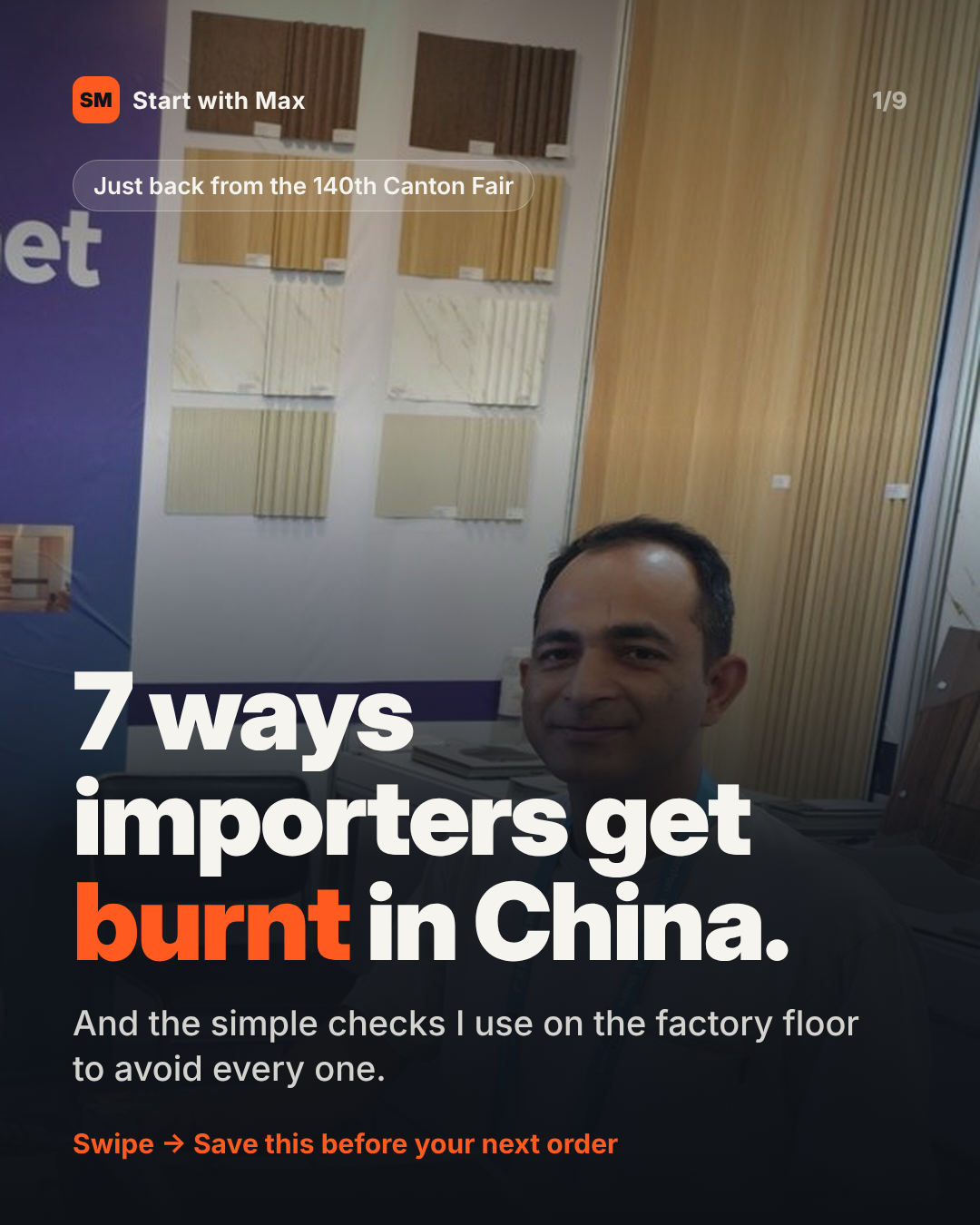
I’ve just come back from the 140th Canton Fair and a run of factory visits around Guangzhou and Foshan. Walking the halls and production floors is a good reminder of something every new importer needs to hear: most problems with Chinese suppliers aren’t bad luck. They follow the same handful of patterns, and nearly all of them can be avoided with a few simple checks before you pay.
Here are the seven traps I see most often, and exactly what I do about each one.
1. The sample switch
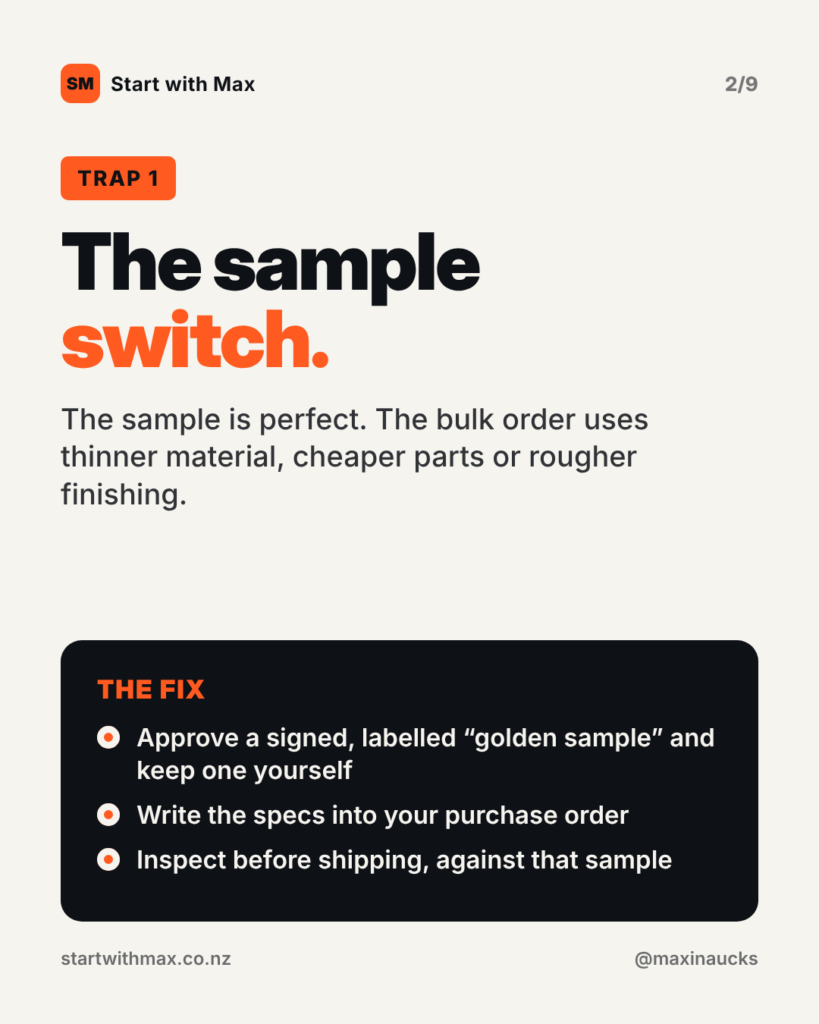
The sample is perfect. Then the bulk order arrives with thinner material, cheaper fittings or rougher finishing. It’s rarely dramatic, just small changes that add up.
The fix: approve a “golden sample”, sign and label it, and keep one yourself while the factory keeps a matching one. Write the key specs (materials, thickness, finish, colour, packaging) into your purchase order. Then have the goods inspected against that sample before you pay the balance and before they ship.
2. “We are the factory”
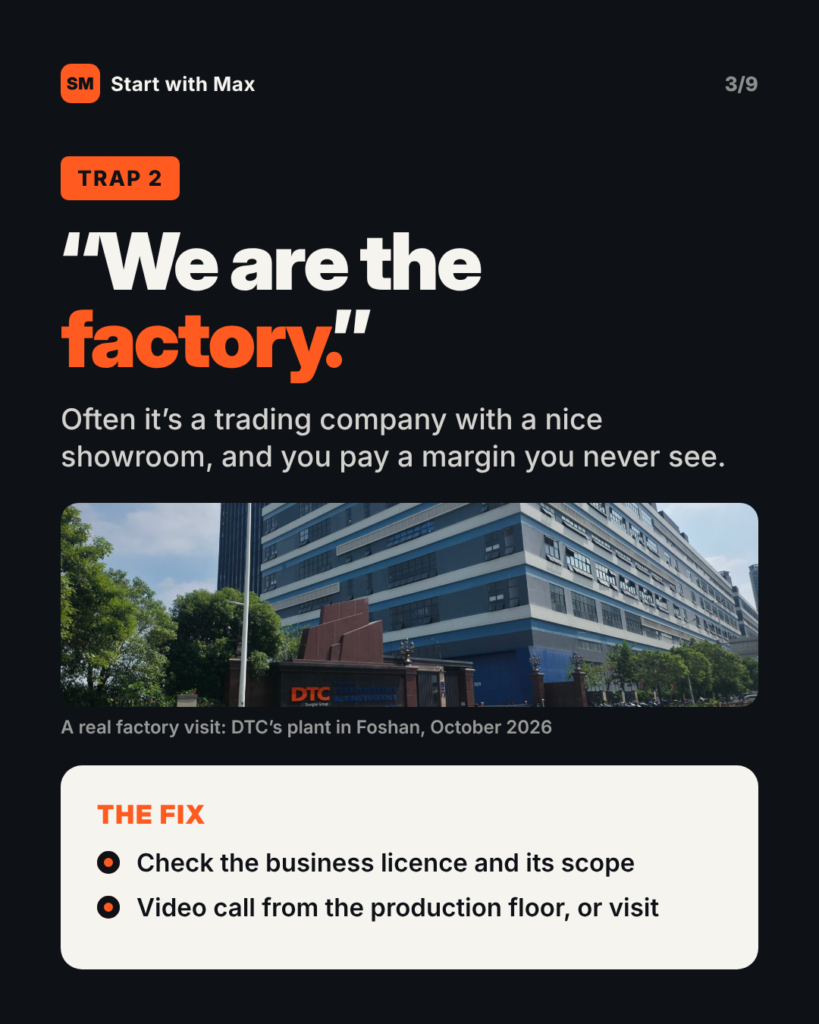
Plenty of suppliers who say they’re the factory are trading companies with a smart showroom. Trading companies aren’t bad (some are excellent and handle small orders well), but you deserve to know who you’re dealing with and what margin you’re paying.
The fix: ask for the business licence and check that its scope includes manufacturing. Ask for a live video call from the production floor, not the showroom. Best of all, visit. I cover these checks in more detail in how to check a Chinese supplier before you pay.
3. The MOQ squeeze
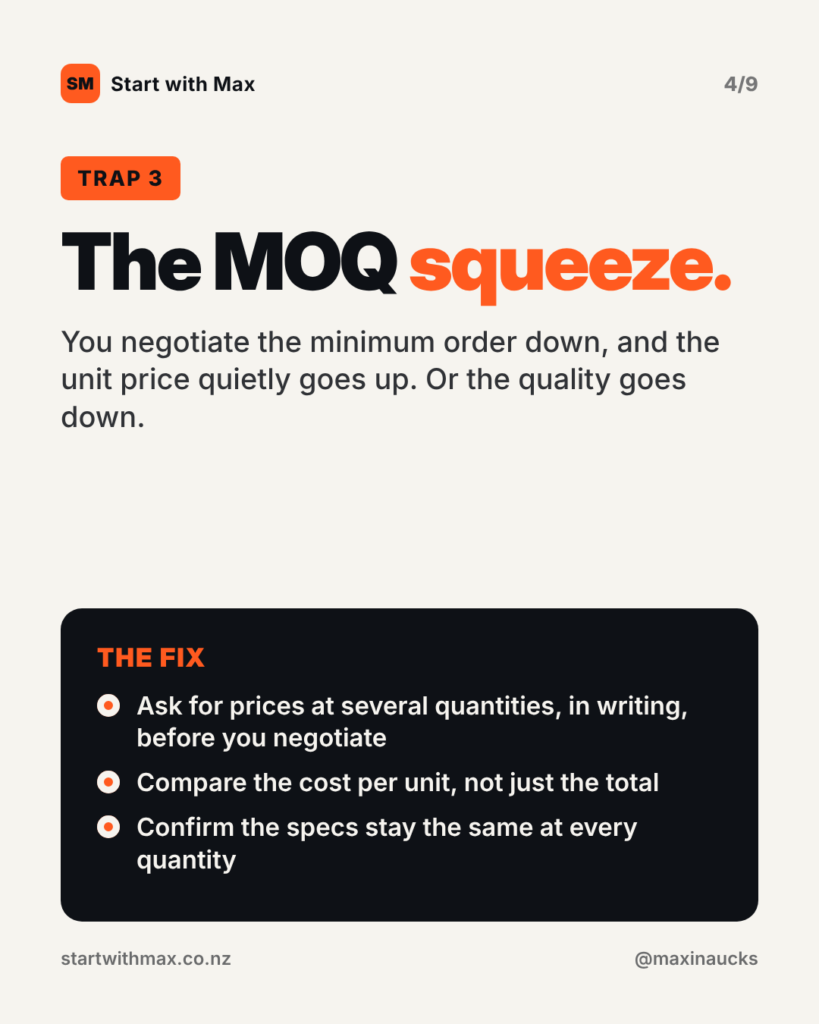
You push the minimum order quantity down and feel like you’ve won. Then the unit price quietly goes up, or the specs quietly go down, to make the smaller order worth their while.
The fix: before you negotiate, ask for prices at several quantities, in writing. Compare cost per unit, not just the total. And confirm in writing that the specs are the same at every quantity.
4. The cheap quote
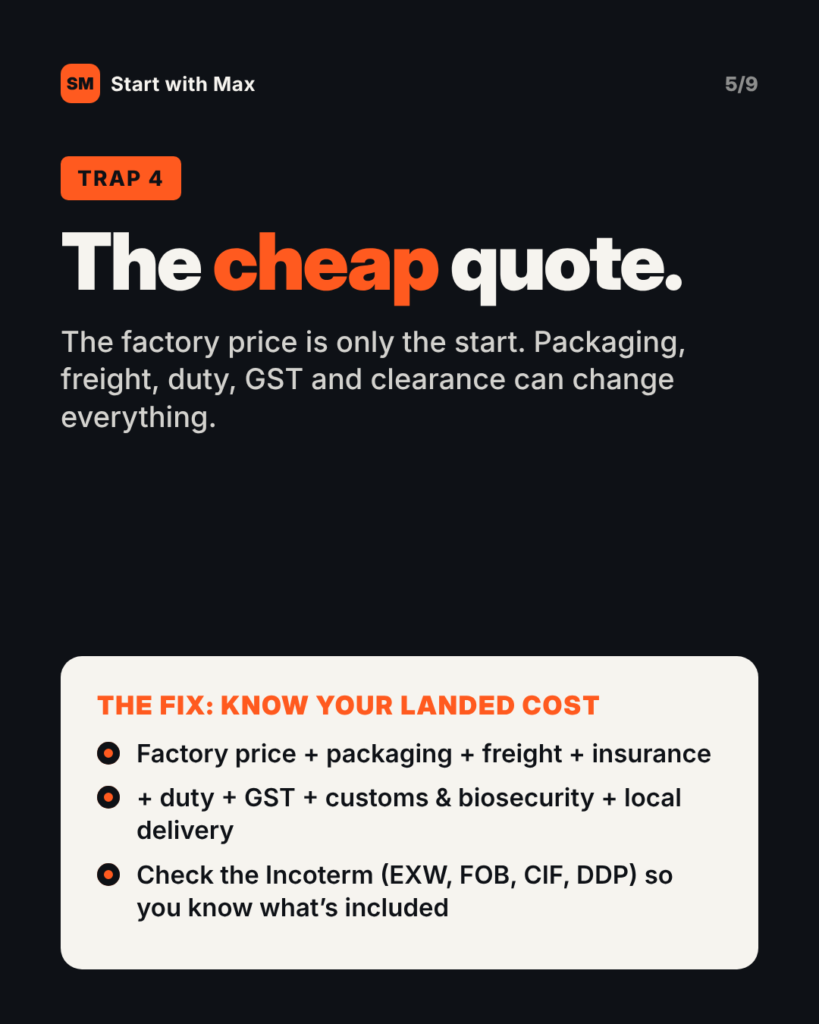
The factory price is only the start. Packaging, cartons, labelling, freight, insurance, import duty, GST, customs and biosecurity clearance and local delivery all land on top. A quote that looks cheapest can easily end up the most expensive.
The fix: always work out your full landed cost per unit before you commit. Check the Incoterm on every quote so you know exactly what’s included: an EXW price and a CIF price aren’t comparable. My guide to Incoterms for NZ importers explains the difference.
5. The delay excuse
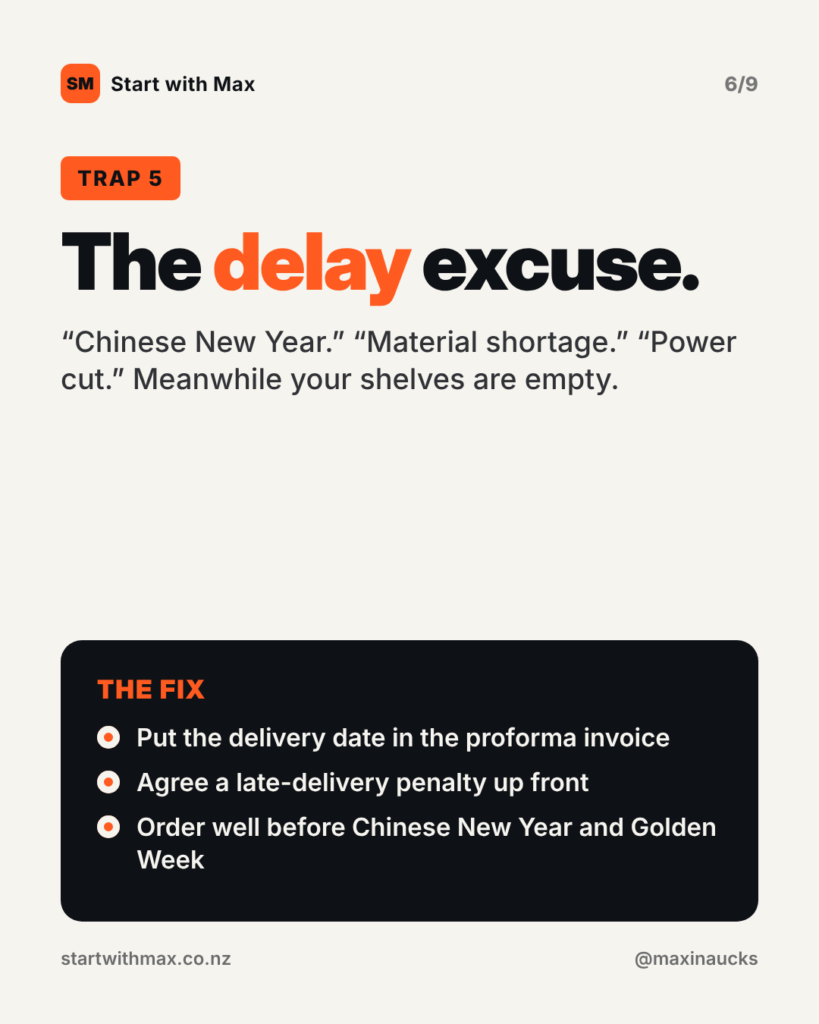
“Chinese New Year.” “Raw material shortage.” “Power cut.” Sometimes these are real, sometimes your order has simply been bumped for a bigger customer. Either way, your shelves are empty.
The fix: put the delivery date in the proforma invoice and agree a late-delivery penalty up front. Plan around China’s big holidays: factories slow down before Chinese New Year and Golden Week, so order well ahead. And build some buffer into your shipping timeline. See courier, air, LCL or FCL for how long each option takes.
6. The paper certificate
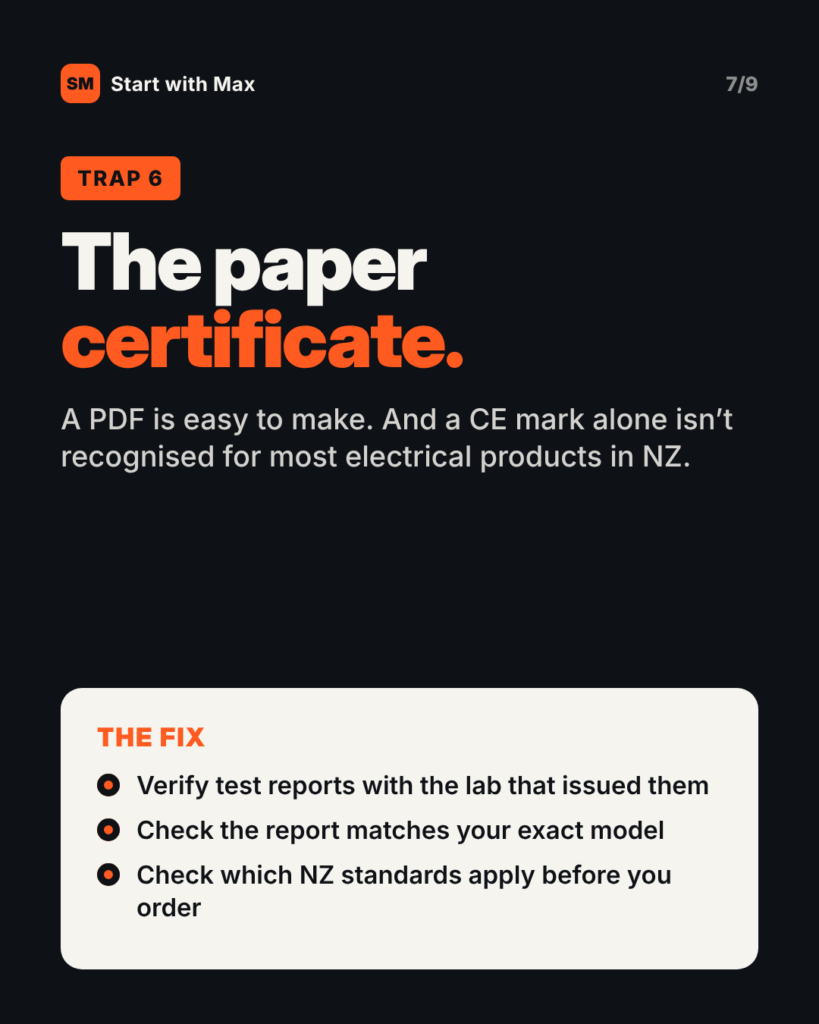
A PDF certificate is easy to make, and a real one may be for a different model or factory. There’s an NZ twist too: WorkSafe notes that for most electrical and electronic products sold in New Zealand, the CE marking has no recognised validity. What matters is meeting the NZ requirements for your product.
The fix: verify test reports directly with the lab that issued them, and check that the report matches your exact model and factory. Before you order, check which NZ product safety standards or bans apply on the Commerce Commission’s product safety page, and check WorkSafe’s guidance if it’s electrical.
7. “We’ve changed our bank account”
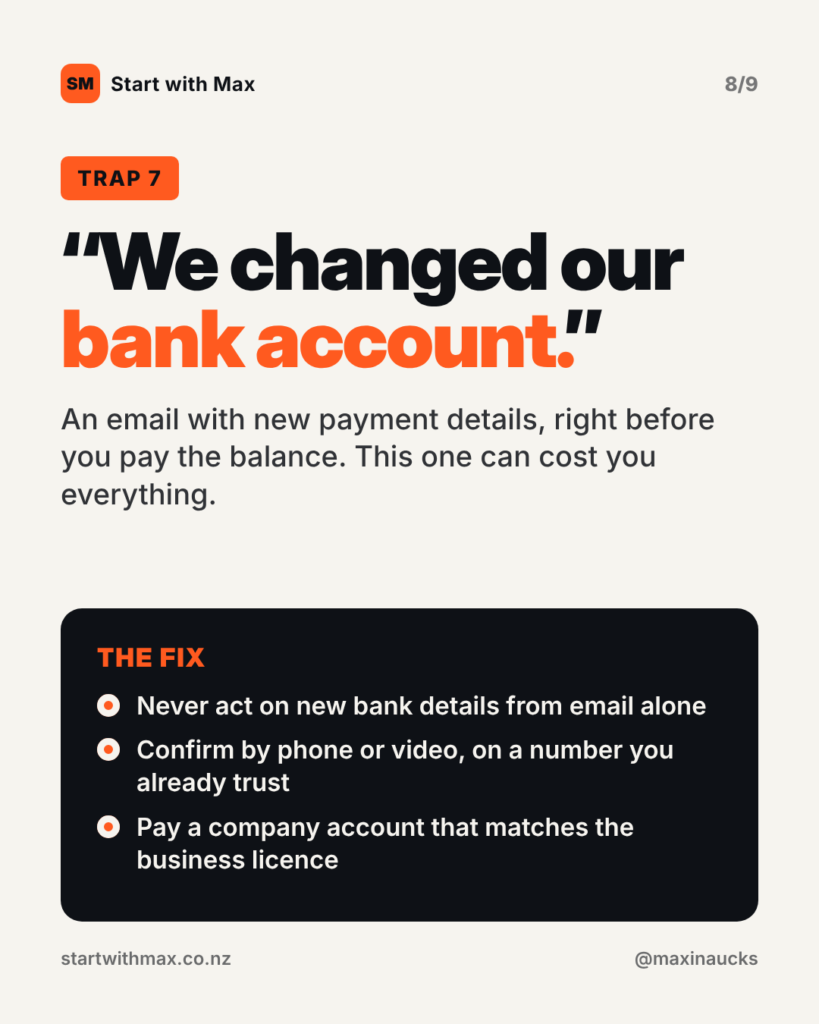
This is the one that can cost you everything. Right before you pay the balance, an email arrives with “updated” bank details. Sometimes the supplier’s email has been hacked; sometimes it’s someone pretending to be them. Once the money is gone, it’s very hard to get back.
The fix: never act on new bank details from an email alone. Confirm by phone or video call, using contact details you already trust, not the ones in the email. And pay a company account in the same name as the business licence, not a personal account.
The bottom line
A supplier isn’t your friend or your enemy. They’re a business, and the best relationships are built on clear specs, clear paperwork and checks on both sides. Treat every order that way and most of these traps simply don’t happen.
New to importing? Start with how to import from China to NZ and grab the free First Import Checklist.
Want someone on the ground?
I visit factories, check suppliers and work out your landed cost before you pay, for businesses in New Zealand and the Pacific Islands. Your first chat is free: see my services and pricing, DM me on Instagram or Facebook @maxinaucks, WhatsApp +64 22 311 8178, email maxinaucks@gmail.com, or use the contact form.