You’ve found a supplier, you’ve worked out your landed cost, and you’re ready to place your first order. Before the goods leave China, it pays to get your paperwork in order on the New Zealand side. Sorting these registrations early means your shipment clears faster and you avoid storage charges while it waits at the port.
1. A New Zealand Business Number (NZBN)
The NZBN is a unique identifier for your business that suppliers, freight forwarders and government agencies can use to look you up. It’s available to every type of business, including sole traders, and it’s free. Source: NZBN
2. A Customs client code
A client code identifies you as a commercial importer for customs clearance. New Zealand Customs requires one for imports valued at NZ$1,000 or more, and for some goods (such as food for sale and motor vehicles) regardless of value. You can apply yourself using form NZCS 224, or your customs broker can apply for you. Source: NZ Customs
Tip: apply before your goods ship, not when they land. If your shipment arrives without a client code in place, clearance can stall.
3. Know your import entry rules
For goods valued over NZ$1,000 you’ll need to lodge an import entry, and that entry must be lodged no later than 20 days after the goods arrive. Your goods can’t be collected until Customs has confirmed clearance and any duties, GST and other charges. Source: business.govt.nz
Most first-time importers use a customs broker or freight forwarder to lodge the entry. It’s worth it: they know the tariff codes and can spot problems before your container hits the wharf.
4. GST registration (when you need it)
Inland Revenue requires you to register for GST if your turnover was at least $60,000 in the last 12 months, or you expect it to be in the next 12 months. Below that, you can choose to register voluntarily. Source: Inland Revenue
Many importers register early so they can claim back the GST paid at the border on stock. Talk to your accountant about what makes sense for your business.
5. Check for biosecurity or product-specific rules
Some products need clearance from the Ministry for Primary Industries (MPI) for biosecurity, and food importers must register with MPI. Timber, plant material and anything that might carry soil or pests deserve extra checking before you order. Source: business.govt.nz
Importing into the Pacific?
If you’re shipping on to Samoa, Tonga, Fiji or the Cook Islands, each country has its own customs rules and registrations. Check with that country’s customs office and your forwarder before you book, especially if goods are transhipping through Auckland.
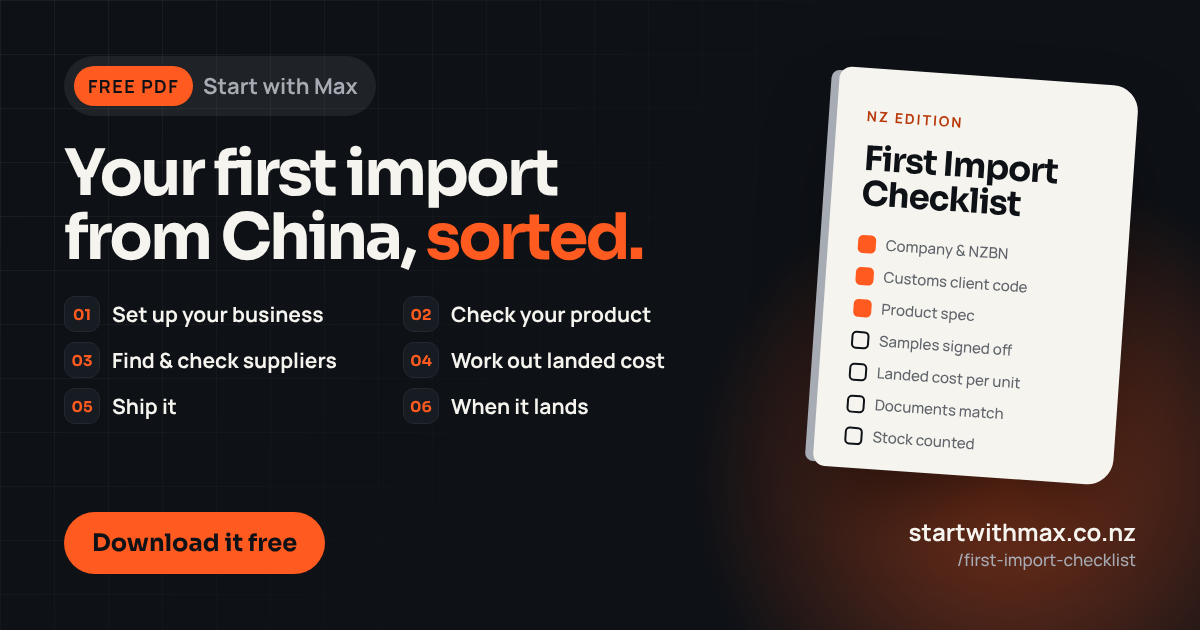
Your pre-shipment checklist
- NZBN registered
- Customs client code approved
- Customs broker or forwarder lined up to lodge your entry
- GST position decided with your accountant
- MPI / biosecurity requirements checked for your product
New to importing? Start with our beginner’s guide to importing from China to NZ, or book a consultation and I’ll walk you through your first order, from supplier checks to getting the goods to your door.
This article is general information, not legal or tax advice. Rules change, so always check the linked official sources before you ship.