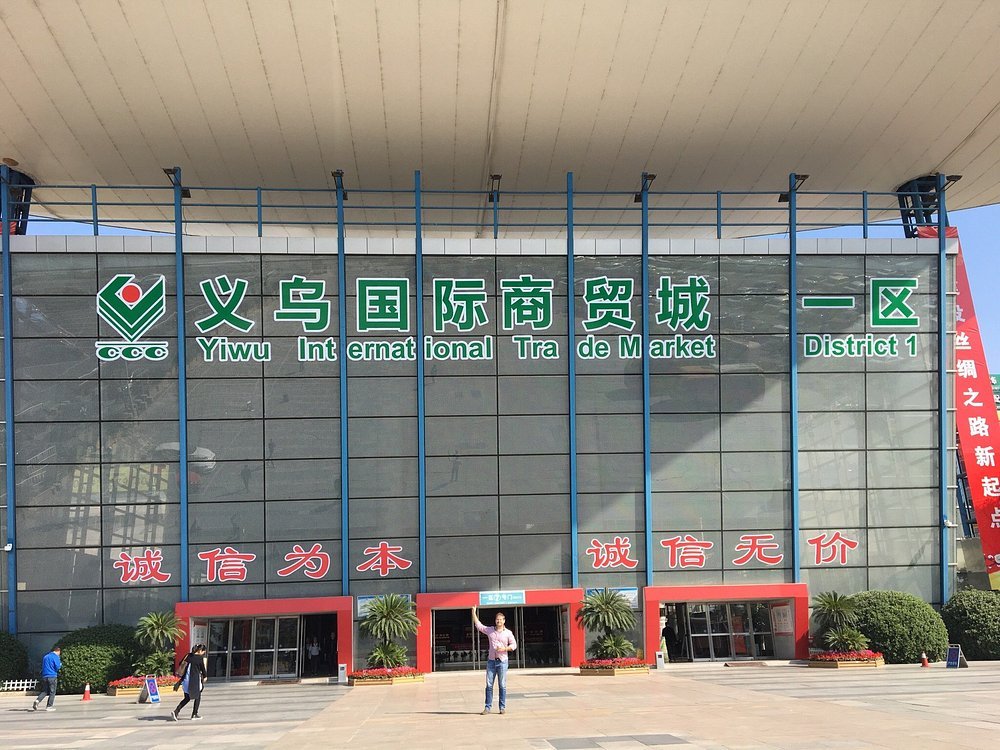
If your first order is a mix of small products, Yiwu is usually where I’d send you first. It’s the home of Yiwu International Trade City, also called Futian Market, which is known as the world’s largest wholesale market for small commodities. Gifts, homewares, hardware, stationery, beauty, toys and party supplies, all in one complex.
This guide is for NZ and Pacific Island businesses: what’s in each district, when Yiwu makes sense and when it doesn’t, and how to buy there without getting burnt.
When Yiwu is the right call
- You want a mixed first order. Many products in smaller quantities, consolidated into one LCL shipment.
- You’re testing a range. A gift shop, a $2 shop, a party-hire business or an online store trying products before committing.
- You need low minimums. Booths are showrooms for factories and traders, and many will sell by the carton.
When it’s not the right call: your core product, ordered in volume. A lot of booths in Yiwu are traders selling ready-made stock rather than the factory itself. That’s fine for testing, but once a product sells, going direct to the factory usually means a better price and more control over quality.
What’s in each district
The market is split into connected districts, each with its own product categories over several floors. Here’s the broad layout:
| District | Best for |
|---|---|
| District 1 | Toys, artificial flowers, jewellery and accessories, crafts and decorations |
| District 2 | Bags and umbrellas, hardware, tools and locks, electrical accessories, kitchenware, small appliances, electronics, clocks |
| District 3 | Stationery and office, sports and outdoor, cosmetics and beauty, buttons and zips |
| District 4 | Socks and hosiery, daily necessities, gloves, hats, scarves and textile basics |
| District 5 | Imported goods, bedding and home textiles, auto accessories |
Layouts move
Floors get re-organised and shops relocate. Treat any district map (including this one) as a starting point, and ask a supplier for their exact booth number before you travel.
How to buy in Yiwu without getting burnt
- Photograph every booth card and product. After a day you won’t remember which booth had what. Write the price, MOQ and item number on the back of each card.
- Ask if they make it. “Is this your factory?” is a fair question. Traders aren’t bad, but you should know who you’re buying from.
- Get a written quote. Item, price, quantity, packing (units per carton and carton size), and lead time.
- Use one consolidator. Buying from ten booths means ten deliveries. Have them sent to one warehouse so it ships to NZ as one LCL or FCL load, with one set of documents.
- Check before it ships. Open cartons at the warehouse, check against your photos and quote, then pay any balance.
- Work out landed cost per item. Cheap at the booth isn’t cheap if freight, duty, GST and clearance double it. See what landed cost is and why it matters.
Things to check for New Zealand
- Product rules. Toys, children’s products, cosmetics, electrical items and anything that touches food can have NZ safety or labelling rules. Check before you buy, not after it lands.
- Biosecurity. Wooden items, natural fibres, dried flowers and wooden packaging can need treatment or certificates for MPI. Artificial flowers are usually fine. Real dried ones need checking.
- Brands. Steer clear of anything carrying someone else’s logo or character. Counterfeit goods can be detained at the border, and the cost is yours.
Getting there
Yiwu is in Zhejiang province. Most NZ buyers fly into Shanghai or Hangzhou and take the high-speed train, or combine it with a Canton Fair trip from Guangzhou by train or a domestic flight into Yiwu airport. Plan at least two full days in the market. One day is rarely enough to cover the districts you need and go back for second looks.
Not sure Yiwu is the right fit? The China Product Hub shows which regions make what, and my Canton Fair guide covers the other big way to meet factories.