A plain white wall says nothing. Add a run of warm timber slats and a strip of LED light, and suddenly the same room looks like it cost twice as much.
That’s the power of acoustic wall panels, and it’s why they’re everywhere right now: cafés, barber shops, offices, hotel lobbies and more and more living rooms. They make a space look designed and sound calmer at the same time, and a feature wall can go up in a day.
I’ve been importing acoustic panels from China for four years, for my own business and for small businesses in Fiji and Australia. In this post I’ll show you why they work so well, how fast the market is growing, and what I’ve learned about importing them the smart way.
What are acoustic wall panels?
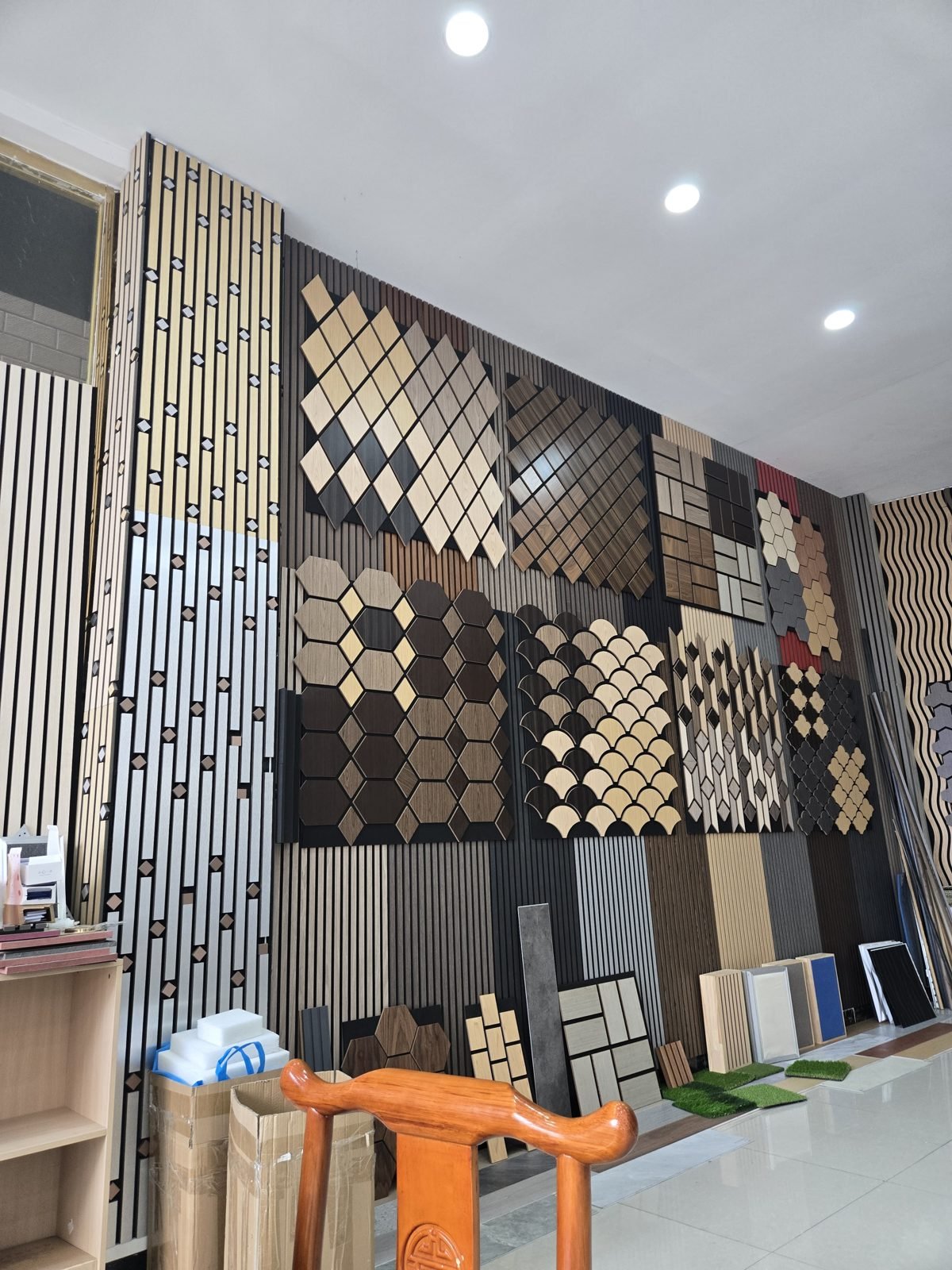
Most are strips of MDF finished in real wood veneer or a wood-look laminate, fixed onto a felt backing, usually polyester (PET) felt that’s often made from recycled plastic. The slats give you the look and the felt behind them soaks up sound.
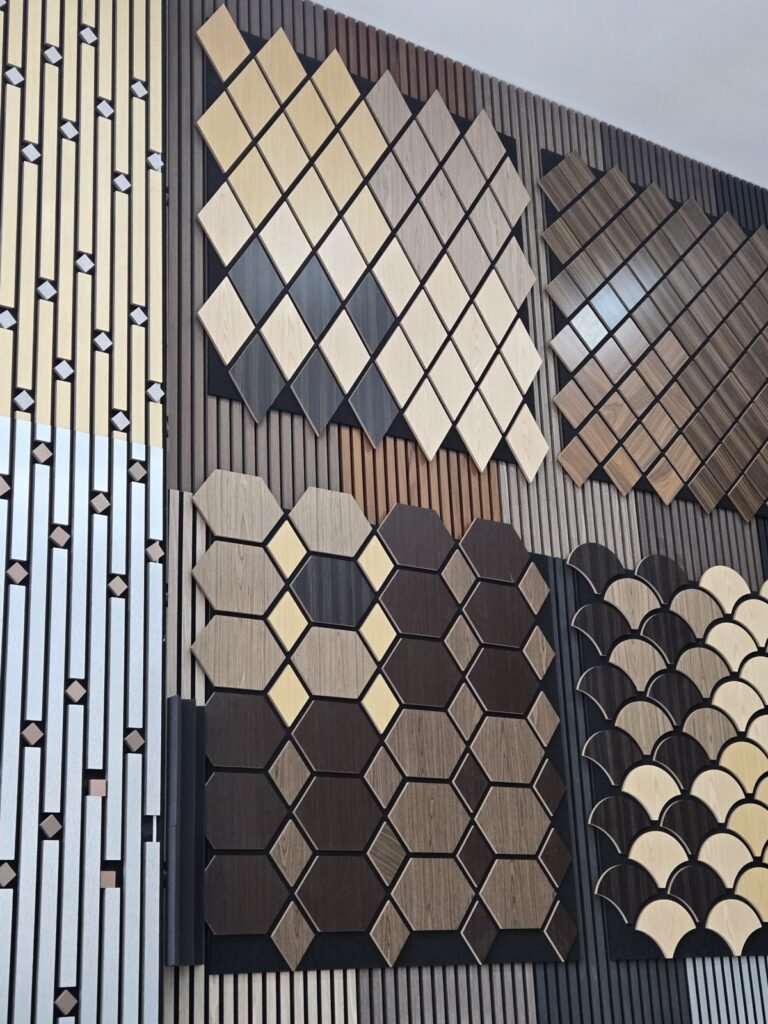
They come as long slatted boards and, more and more, as shaped tiles: diamonds, hexagons, fish-scales and mixed-width stripes, in everything from light oak to walnut, black, grey and even brushed gold and silver.
Why they make walls look so good
- Warmth without the cost of solid timber. Oak, walnut, smoked and black finishes that look like custom joinery.
- Taller-looking rooms. Vertical lines draw the eye up and make ceilings feel higher.
- Texture and shadow. The grooves catch the light, especially with LED strip lighting above or behind the panels.
- Patterns for every style. Diamonds, hexagons, fish-scales and metallic accents turn a wall into a proper feature.
- They hide a lot. Uneven plaster, tired paint and even TV cables disappear behind a panel wall.
They don’t just look good, they sound better too
Hard walls bounce sound around, which is why busy cafés get loud and open-plan offices feel tiring. The felt backing and grooves absorb part of that sound and cut down echo, so a room feels calmer. That’s a big reason you now see them in restaurants, offices, salons and barber shops, churches, home theatres and bedrooms.
They’re also quick to install. Most panels screw or glue straight onto the wall or onto timber battens, so a feature wall is often a one-day job.
How sellers of older homes use panels to get a better price
Older homes often have great bones but tired walls: dated paint, patched plaster, old wallpaper and awkward TV corners. Buyers notice. Instead of a full renovation, more sellers are adding one or two acoustic panel feature walls before they list, so the home photographs well and feels modern at open homes. It’s the same trick renovators and property flippers use.
Where sellers put them:
- The living room TV wall. It’s usually the hero photo in the listing and the room buyers care about most.
- Behind the bed in the main bedroom. An instant hotel-style bedhead that makes the room feel finished.
- The entry or hallway. It sets the tone the moment buyers walk through the door.
- Over damaged or uneven walls. Panels cover cracks and patches without re-plastering or repainting.
Presentation really does move buyers. In the US National Association of Realtors’ 2025 Profile of Home Staging, 83% of buyers’ agents said staging made it easier for buyers to picture the property as their future home, and 29% of sellers’ agents said staged homes received a 1% to 10% increase in the dollar value offered. Almost half (49%) said staging cut the time homes spent on the market, and the living room, main bedroom and kitchen were rated the most important rooms (NAR).
Every property and market is different, so check with your agent what buyers in your area are looking for. But a panel feature wall is one of the most affordable ways to make an older home look updated, and it can be done in a day, right before the listing photos.
The market is growing fast
This isn’t just an Instagram trend. Industry research shows steady growth:
- The global acoustic panel market was worth about US$8.6 billion in 2025 and is forecast to reach US$16.4 billion by 2035, growing around 6.7% a year (Global Market Insights).
- Wooden acoustic panels, the decorative kind you see on feature walls, were worth about US$1.5 billion in 2025 and are growing around 6.5% a year (Global Market Insights).
- Acoustic slat-wall panels alone were estimated at US$2.59 billion in 2025, heading for about US$5.07 billion by 2034 at around 7.8% a year. Asia Pacific, which includes Australia, is the fastest-growing region at about 9.5% a year (Growth Market Reports).
- Asia Pacific held about 46.8% of the architectural acoustic panel market in 2025, and wood panels are forecast to be the leading product type, with a 21.98% share in 2026 (Fortune Business Insights).
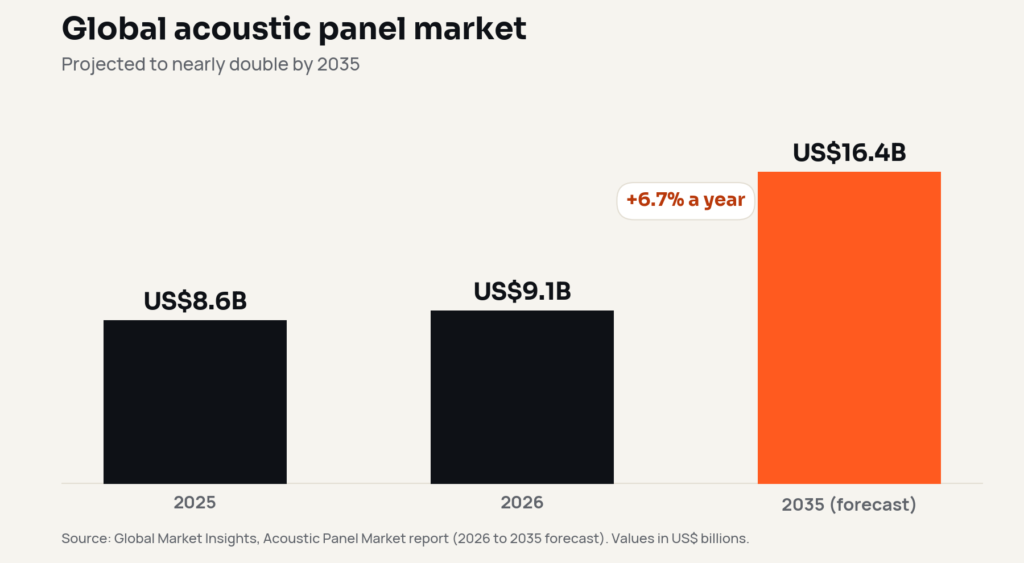
Research firms don’t agree on the exact numbers, but they all point the same way: more demand, driven by new commercial fit-outs, hotels and hospitality, more awareness of noise, and people wanting homes that look better and feel quieter.
What I’ve learned from four years of importing them
- Order samples first. Colour and grain vary between factories and even between batches, so approve a physical sample before you pay.
- Check the felt, not just the face. Felt thickness and density make a real difference to how the panel performs and how straight it stays.
- Plan shipping around the size. Panels are long, so packaging and CBM matter. Strong cartons and corner protection save you from damaged stock.
- Mix colours to reach MOQ. Most factories have a minimum per order, but you can often combine several colours to reach it and fill an LCL or FCL shipment efficiently.
- Ask for fire test reports. Commercial fit-outs in NZ and Australia usually need fire performance documents, so get them from the factory before you order.
- Work out your landed cost per panel. Freight, duty, GST and clearance can change the numbers a lot. Here’s how landed cost works.
Helping small businesses import panels to Fiji and Australia
Over the last four years I’ve visited acoustic panel factories in China, compared suppliers and helped small businesses in Fiji and Australia bring panels in for their shops, projects and customers. Whether you’re a builder, an interior designer, a shop owner or starting your own panel business, I can help you find the right factory, check samples, work out your landed cost and arrange shipping.

Thinking about importing acoustic panels? Send me the colours, patterns and rough quantity you’re after, and where they’re going. Your first chat is free.
Got an idea? DM me today.
Free first chat on Instagram, Messenger or WhatsApp, or use the contact form.
Sources
- Global Market Insights: Acoustic Panel Market report
- Growth Market Reports: Acoustic Slat-Wall Panel Market
- Fortune Business Insights: Architectural Acoustic Panels Market
- National Association of Realtors: 2025 Profile of Home Staging
Thinking about importing this yourself? See my services and pricing, or book a free first chat.